In the field
Where the systems get built.

Day to day
Where the code actually gets written.
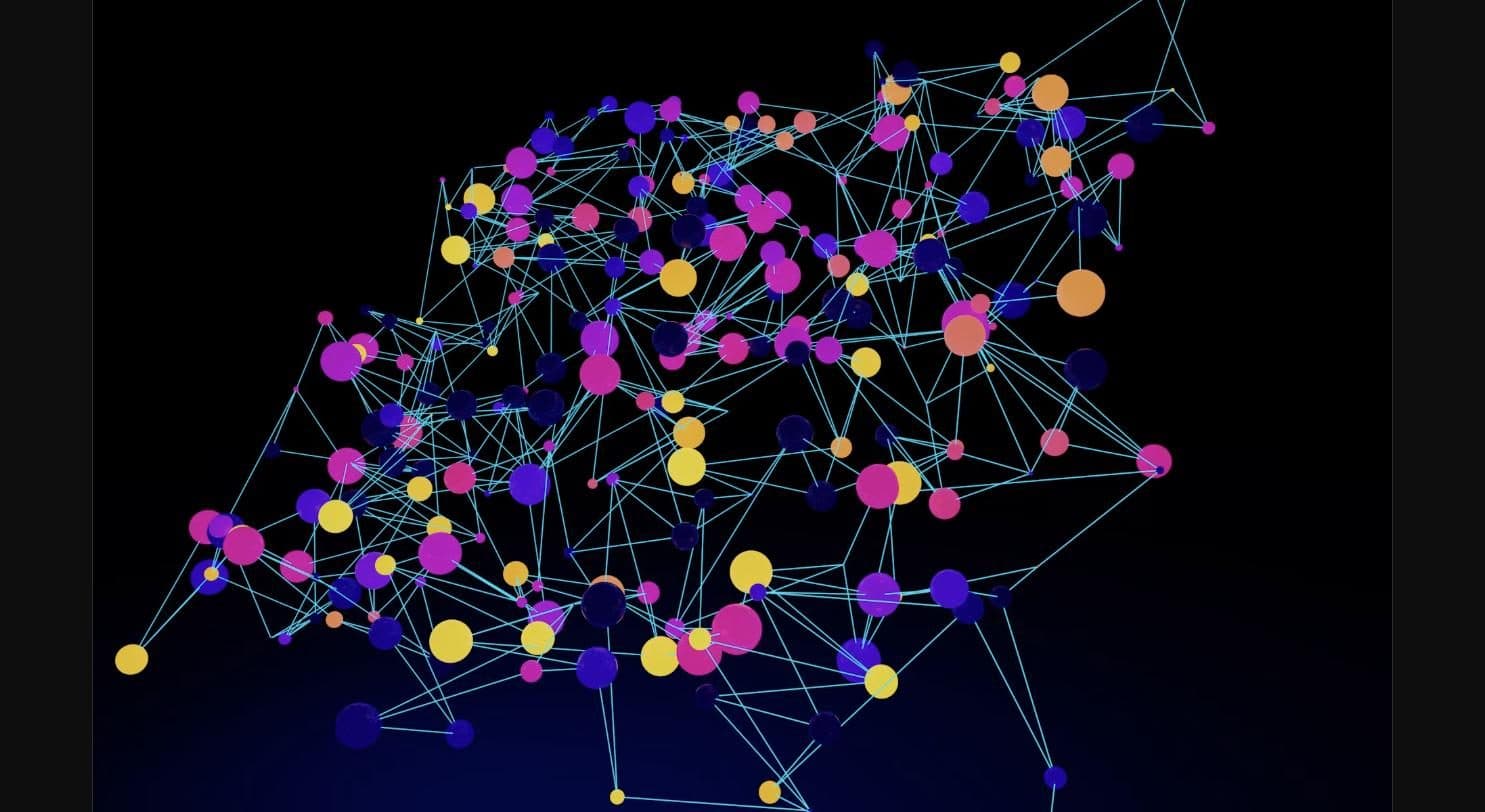
The mental model
Every system starts as a network of domains.

Where AI fits
Layered on top, once the fundamentals hold.
I design and build full-stack web platforms, offline-first mobile apps, and data-driven tools — modeled with Domain-Driven Design so they stay reliable as they grow, and as AI gets woven into how they work.
Every system starts as a model of the real process it supports — bounded contexts, clear aggregates, and boundaries that keep growth from turning into a mess.
Field teams don't always have signal. I build offline-first by default — local storage, background sync, and interfaces that keep working when the network doesn't.
From data model to deployed product — backend, frontend, mobile, and the pipelines that ship it — one person who can own the whole build.
Not AI for its own sake — assistants, automation, and generated reports layered onto a system only once the fundamentals underneath it are solid.
Production systems used daily by a government agency and its field teams — not portfolio demos.
From data modeling to deployment, one person accountable for the whole build, start to finish.
Offline-first by default, so field teams in low-signal areas are never blocked from doing their job.
TypeScript, tested, and documented — code the next developer on the team can actually pick up.
I borrow the language of Domain-Driven Design for how I organize skills too — each area below is a domain I can own from architecture to launch.
Full-stack applications and dashboards — from public-facing sites to internal admin systems, built with clean DDD-structured backends in TypeScript or Python.
Offline-first Android apps for field work — photo and GPS capture, local databases, and background sync back to a live backend.
Embedding AI where it earns its place — assistants, document and report automation, and intelligent workflows layered on top of solid systems.
Turning raw records into decisions — realtime dashboards, exportable reports, and analytics views built on top of production data.
Where the code actually gets written.
Every system starts as a network of domains.
Layered on top, once the fundamentals hold.
A mix of public-sector platforms and independent builds — each one modeled, built, and deployed end to end.
A paperless visitor registration system built for a government agency, replacing a manual, Excel-based front-desk register with a single digital system used across every department.

An offline-first system for a government agency's field teams, pairing a mobile inspection app with automated compliance reporting and a permit & licensing workflow.
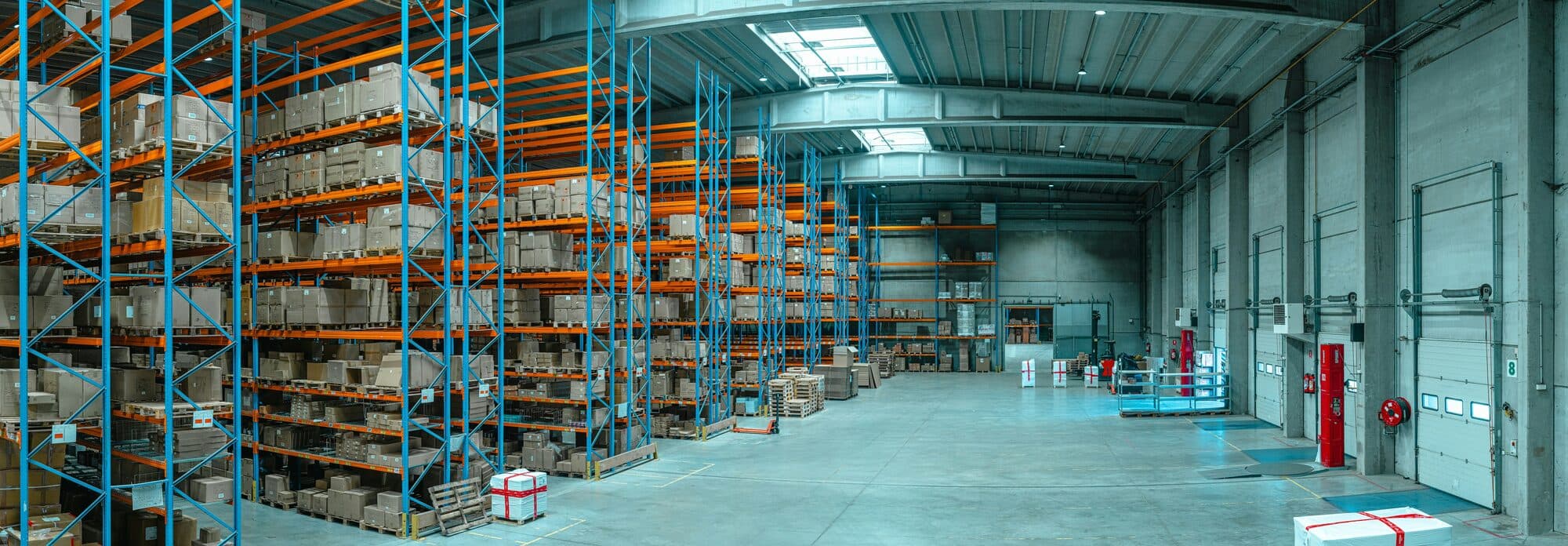
A platform built for a government agency to bring real-time visibility to shipments, vehicles, and warehouse stock — replacing manual tracking with a single connected system.
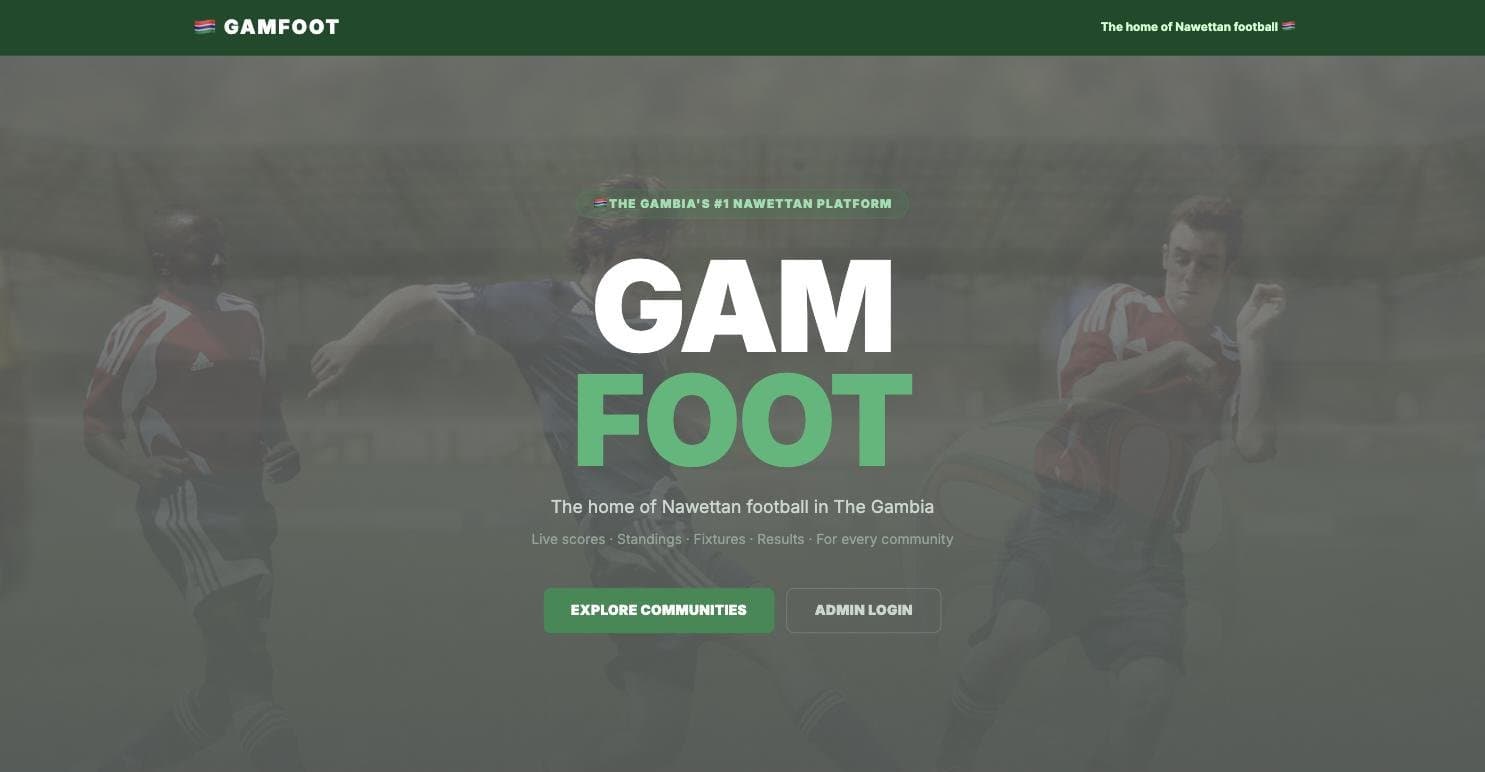
A multi-tenant platform for managing Nawettan (community football) tournaments across The Gambia — built independently, end to end, as a personal initiative under TechPalz.
A full redevelopment of a government agency's public website, moving it onto a modern headless CMS and presenting the rebuild directly to board-level stakeholders.
I like working alongside other developers, designers, and domain experts — not just shipping alone. GamFoot’s repo is public, so jump straight in there. The other two live in a private repo — just say hello and I’ll add you as a reviewer.
A growing multi-tenant platform for Nawettan tournaments — more communities, live-score improvements, and a better fan experience are all open ground.
The site you're on, including the AI chat pod and the DDD layering. The repo is private, but I'm happy to add reviewers who want to see the architecture and suggest changes.
A small DDD-layered FastAPI service that lives in the same private repo. Ideas welcome: a real persistence adapter, auth, or extending the domain beyond fixture scheduling.
Have a different idea for us to work on?
Let’s talkThe same sequence every time — it’s what keeps systems maintainable once they’re out of my hands.
Map the real-world process first — the entities, rules, and edge cases — before a line of code is written.
Turn the model into bounded contexts and aggregates, so each part of the system has a clear, single responsibility.
Backend, frontend, and mobile together — built in step so nothing is bolted on after the fact.
Automated tests, then a real deployment pipeline — not a demo that only works on one machine.
Software meets real usage and real feedback. I stay on to fix, extend, and scale it.

I’m a software developer based in The Gambia, working across web, mobile, AI, and data. Most of my production work has been building digital systems for public institutions — the kind of software that has to work reliably for people who aren’t especially technical, often in places with unreliable connectivity.
That’s shaped how I build: offline-first where it matters, modeled with Domain-Driven Design so systems stay understandable as they grow, and shipped as complete products — not just prototypes. Alongside that, I co-founded a technology venture building automated digital solutions for institutions across West Africa, and I keep a handful of independent projects running for the same reason most developers do: to build the things I think should exist.
Alongside the tools listed above, these are the broader areas I work in — from AI and data to native mobile development.
Machine learning and deep learning, including practical AI integration — from classical models like Random Forest and SVM classifiers to applying AI where it earns its place inside production systems.
Full-stack development across web, desktop, and Android — comfortable owning a build from data model to deployed product.
Native Android apps built with Jetpack Compose, designed offline-first so field conditions and unreliable connectivity don't break the experience.
SQL-driven data management and analysis — from telecom subscriber databases to reporting and data-driven problem solving.
Computer networking, configuration, and troubleshooting — including hardware and IT support — plus basic cybersecurity practices.
Strong analytical and mathematical problem-solving, paired with clear written and verbal communication across technical and non-technical teams.
Whether it’s a full platform, a mobile app, or a system that needs AI woven in — I’m glad to talk through what you’re building.